
Joint vs Blunt vs Spliff: What Is the Difference?
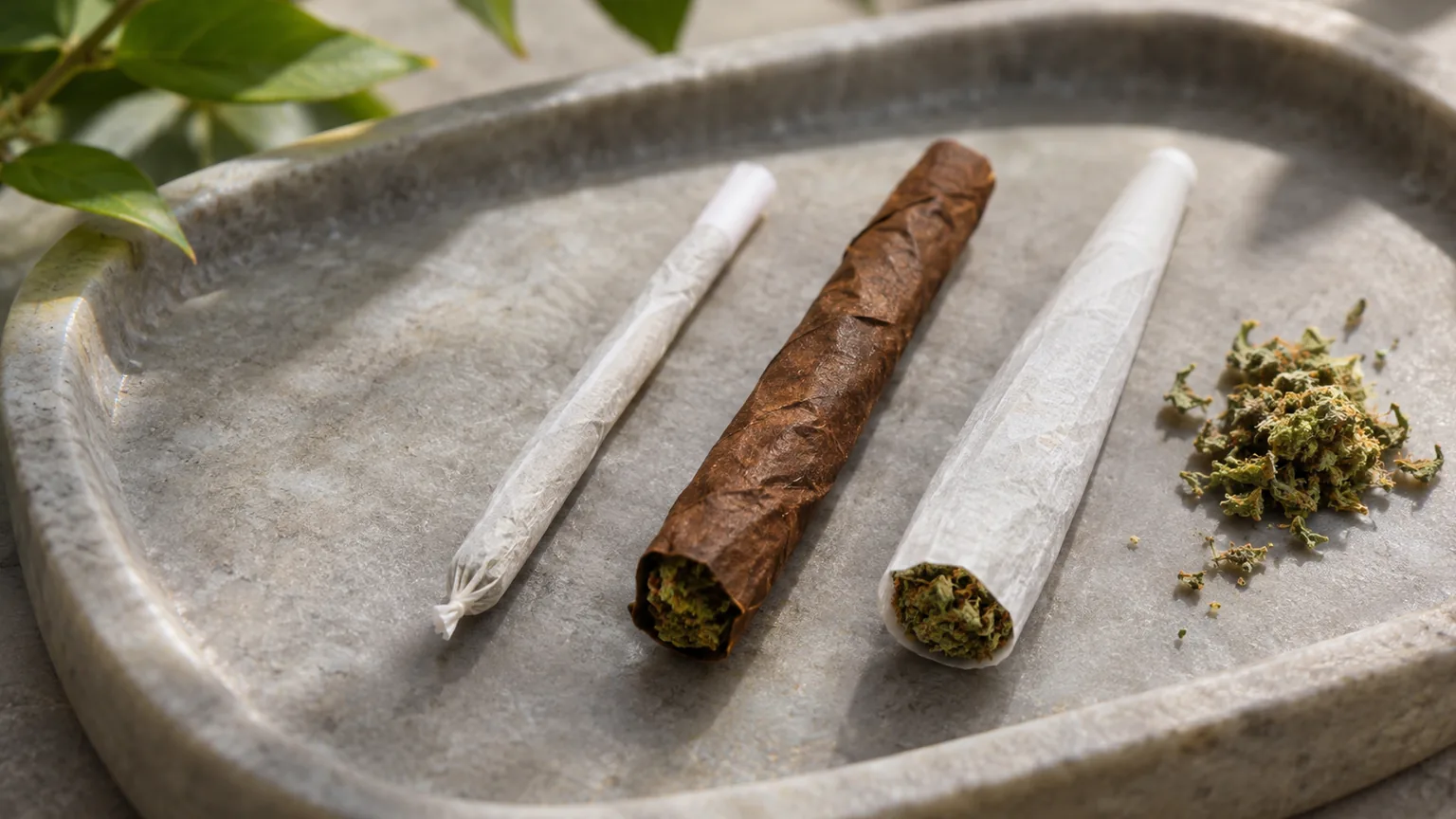
A joint is cannabis rolled in paper. A blunt is cannabis rolled in a thicker wrap, like a cigar wrapper. A spliff is a joint with tobacco mixed into the cannabis.
All three get lit and smoked the same way. The wrap and what goes inside are what set them apart.
What is a joint?
The California Department of Public Health (CDPH) describes a joint as “Cannabis that is rolled in paper and smoked.”
A joint that comes rolled for you is a pre-roll. The state’s Department of Cannabis Control (DCC) defines a pre-roll as flower, shake, leaf or kief rolled in paper.
Kief is the plant’s resinous trichomes, separated from the plant. Those are the tiny, sticky crystals you see on dried flower.
Some pre-rolls have cannabis concentrate added to the flower. Our post on what an infused pre-roll is explains how those differ from a plain joint.
What is a blunt?
The CDPH defines blunts as “Cigars or cigar wrappers that are partly or completely emptied out and refilled with cannabis.”
That cigar wrap is made from tobacco leaf. So a blunt rolled in one has nicotine, the CDPH says.
The wrap is thicker than rolling paper. A blunt is often fatter than a joint, too.
What is a spliff?
Most people use the word spliff for a joint with loose tobacco mixed in with the cannabis. It is rolled in paper, like a joint.
Because of the tobacco, a spliff has nicotine. A plain joint does not.
What is the difference between a joint, a blunt and a spliff?
Here is how the three compare:
- Joint: cannabis only, rolled in paper.
- Blunt: cannabis only, rolled in a thick wrap. The classic blunt uses a tobacco cigar wrapper.
- Spliff: cannabis and tobacco mixed, rolled in paper.
So a spliff uses the same paper as a joint, with tobacco added to the filling. A blunt has the same filling as a joint, in a heavier wrap.
Can you buy a spliff at a dispensary?
No. California’s Business and Professions Code, section 26054, bars a licensed cannabis store from selling tobacco products.
The DCC’s rules go a step further. Section 17300 bans cannabis products with additives that raise addictive potential, and it names nicotine as one.
That means a licensed store cannot sell you tobacco mixed with cannabis. You will not find spliffs on a dispensary shelf in California.
Can you buy a blunt at a dispensary?
Yes, though not the tobacco kind. A blunt sold in a licensed store cannot come in a tobacco wrap, under those same rules.
Read the package to see what its wrap is made of. The label also lists the brand that made it.
Where can you smoke a joint, a blunt or a spliff?
The same rules cover all three. The DCC says you can use cannabis on private property, but not in public places like restaurants or bars.
California law also bans cannabis smoke anywhere tobacco smoking is banned. That comes from Health and Safety Code section 11362.3.
If you rent, check your lease. The DCC says property owners can ban cannabis use on their property.
Can you roll your own joint in California?
Yes, if you are 21 or older. Health and Safety Code section 11362.1 lets adults possess up to 28.5 grams of cannabis that is not concentrate.
The same section lets adults buy and own cannabis accessories. Under section 11018.2, that word covers gear made for smoking cannabis, and rolling papers fit that job.
Roll it at home, on private property. The rules on where you can smoke it are the same as for a store bought pre-roll.
Does a pre-roll count toward the daily limit?
Yes. Section 15409 of the DCC’s rules caps what a store can sell one adult customer in a day.
The cap is 28.5 grams of cannabis that is not concentrate, plus 8 grams of concentrate. A plain pre-roll counts toward the first number.
An infused pre-roll has concentrate added. The 8 gram limit includes concentrate inside cannabis products, the same section says.
Which one should you pick?
Pick by what you want inside the wrap. If you want cannabis and nothing else, choose a joint.
If you like a thicker roll, look at a blunt from a licensed brand. Ask our team what each wrap is made of.
A pre-roll saves you the rolling. It also comes sealed and labeled, so you can see who made it.
Where can you buy joints and blunts in Los Angeles?
All five Caña stores sell pre-rolls. You will find us in Beverly Grove, Sylmar, Harbor City, Silver Lake and East Los Angeles.
Our pre-roll counter has singles, packs, minis, blunts and infused pre-rolls. Each store has its own shelf, so check the menu for the store you plan to visit.
Our page on pre-rolled joints compares the formats we stock, from singles to packs.
Bring a valid ID that shows you are 21 or older. Every Caña store checks it at the door.
What else do people ask about joints, blunts and spliffs?
Is a pre-roll the same as a joint?
Yes. A pre-roll is a joint that a licensed maker rolled for you.
Does a blunt from a dispensary have tobacco in it?
No. A licensed California store cannot sell tobacco products, so its blunts use other wraps.
Why do people call it a spliff?
It is slang. Most people use spliff to mean cannabis and tobacco rolled together in paper.
For adults 21 and over. Nothing in the Journal is medical advice. Keep cannabis out of reach of children and pets.
More from the Journal.
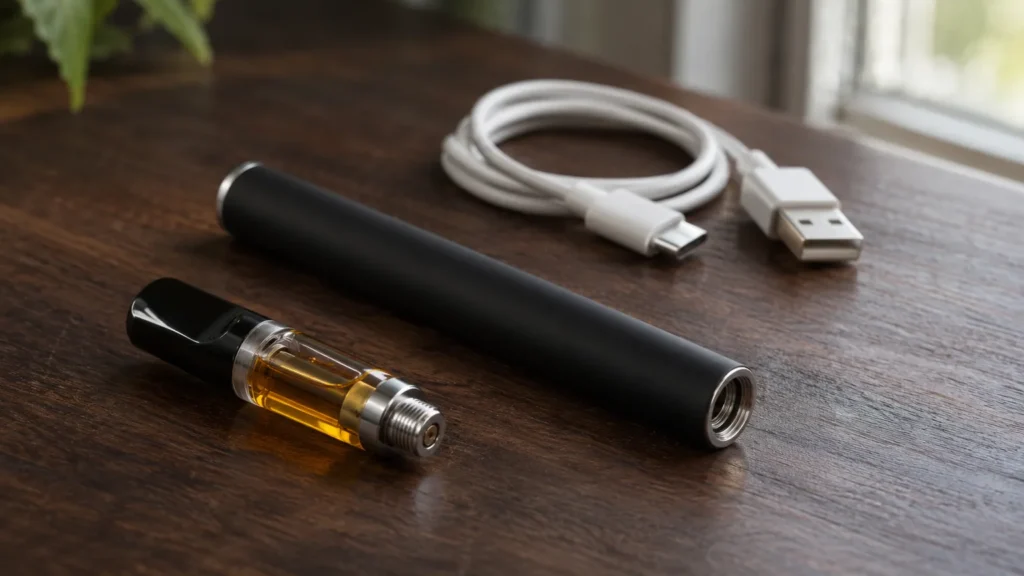
What Is a 510 Thread Battery?
A 510 thread battery is the small rechargeable pen that most vape carts screw onto. Here is how it fits, how the buttons work
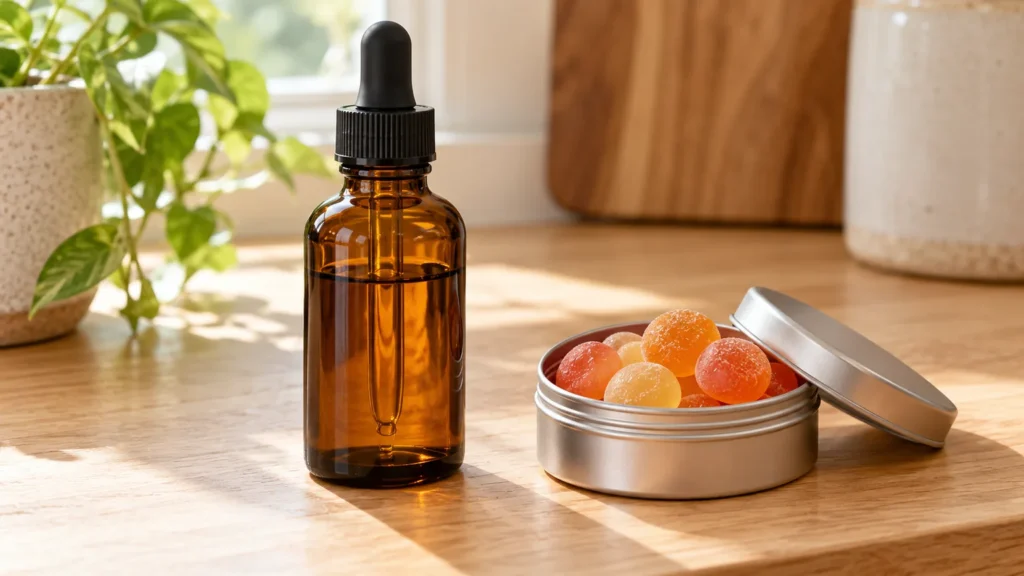
Do Dispensaries Sell CBD?
Yes, licensed dispensaries sell CBD products. Here is who can buy them, what the label must show, and how they differ from hemp CBD
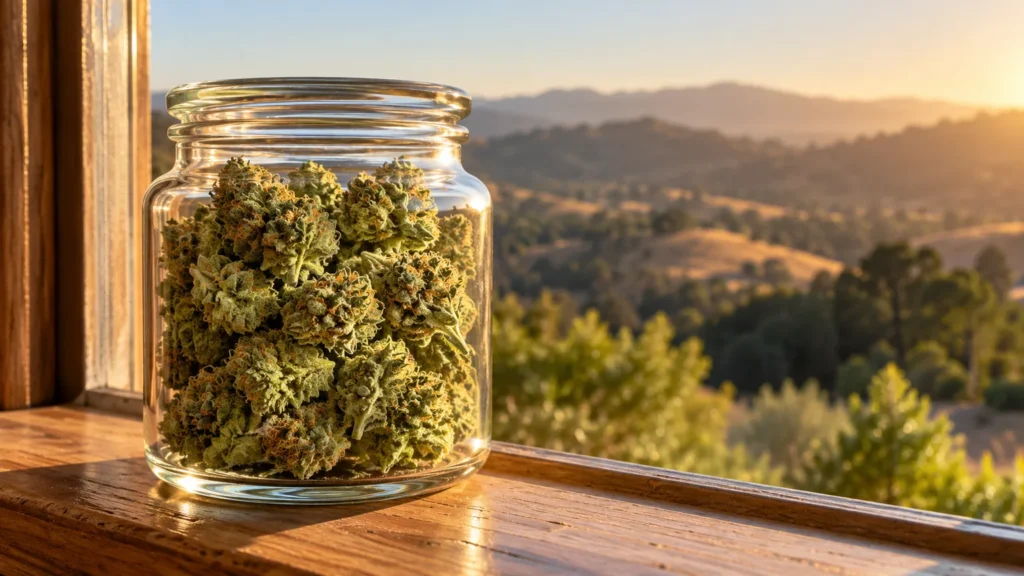
What Is Cali Weed?
Cali weed is cannabis grown in California. Here is what the state requires of it, what a place name on the label means, and
Five stores, open every day.
Beverly, Sylmar, Harbor City, Silver Lake and Los Angeles. Bring a valid ID showing you are 21 or older.