
How to Read an Online Dispensary Menu Without Getting Overwhelmed

You open a dispensary’s online menu for the first time and you are staring at hundreds of products. Flower, edibles, vapes, concentrates, tinctures, topicals, pre-rolls. Each category has dozens of options with names, percentages, and prices that do not mean much if you are not already familiar with the terminology.
It is easy to get overwhelmed. But once you understand how menus are organized and what the key data points mean, you can navigate any dispensary menu with confidence in a few minutes.
Here is how to make sense of it all.
Start With the Categories
Every dispensary menu is organized by product type. These are the main categories you will see and what they mean:
Flower. Cannabis buds that you smoke in a pipe, bong, or pre-rolled joint. This is the most traditional form of cannabis. Flower gives you the full spectrum of cannabinoids and terpenes.
Pre-rolls. Joints that are already rolled and ready to smoke. Same product as flower, just pre-packaged for convenience.
Edibles. Food and drink products infused with cannabis. Gummies, chocolates, mints, beverages, and baked goods all fall in this category. Effects take longer to kick in (30 to 90 minutes) but last longer than smoking or vaping.
Vape cartridges. Pre-filled cartridges of cannabis oil that attach to a reusable battery. Fast onset, easy to dose, portable. Available in 510-thread carts and disposable formats.
Concentrates. High potency cannabis extracts like wax, shatter, live resin, and rosin. These are used for dabbing or adding to flower. Best for experienced consumers. Our post on cannabis concentrates covers the different types in detail.
Topicals. Creams, balms, and lotions infused with THC or CBD. Applied to the skin for localized relief. No psychoactive effects in most cases. More on these in our guide to cannabis topicals.
Tinctures. Liquid cannabis extracts taken under the tongue. Onset is faster than edibles but slower than smoking. Dosing is precise because tinctures come with a measured dropper.
CBD products. Products made primarily with CBD (cannabidiol) rather than THC. These do not produce a high and are used for relaxation, physical comfort, and general wellness. Browse the full selection of CBD products to see what is available.
Start by deciding which category fits your needs. If you are new to cannabis, flower, pre-rolls, low-dose edibles, and vape pens are the most beginner friendly starting points.
Understanding THC and CBD Percentages
Every product on a dispensary menu lists its THC and CBD content. These numbers tell you how potent the product is.
THC (tetrahydrocannabinol) is the primary psychoactive compound in cannabis. It is what produces the “high.” Higher THC percentages generally mean stronger effects, but the relationship is not perfectly linear. A 25% THC flower does not feel exactly twice as strong as a 12.5% flower because other compounds in the plant (terpenes, minor cannabinoids) influence the experience.
CBD (cannabidiol) is non-psychoactive. It is associated with calming effects, physical comfort, and reduced anxiety. Products with higher CBD and lower THC tend to produce a gentler, more clear-headed experience.
For flower, THC content typically ranges from 15% to 30%. For vape cartridges and concentrates, THC content can be much higher, sometimes exceeding 80%. Edibles are measured in milligrams per serving rather than percentages. A standard edible serving in California is 10 mg of THC.
If you are not sure where to start, our post on THC percentage and whether it really matters is a good reference.
Strain Names and Types
Cannabis products, especially flower and vapes, are listed by strain name. Strain names like “Blue Dream,” “OG Kush,” or “Gelato” refer to specific genetic varieties of the cannabis plant. Each strain has its own cannabinoid and terpene profile, which means each one feels a little different.
Alongside the strain name, you will usually see a classification:
Indica. Associated with body relaxation, sedation, and calm. Popular for evening use and sleep.
Sativa. Associated with mental energy, uplift, and creativity. Popular for daytime use or social settings.
Hybrid. A cross between indica and sativa genetics. Hybrids can lean indica-dominant, sativa-dominant, or balanced. Most modern strains are hybrids of some kind.
These categories are helpful as a starting point, but they are generalizations. The terpene profile of a specific strain is a better predictor of effects than the indica/sativa/hybrid label alone.
If you are brand new, our guide on top strains for first time users lists approachable options to start with.
Reading the Price Column
Cannabis prices on a dispensary menu reflect the base cost before taxes. California applies state excise tax and local sales tax to cannabis purchases, so the final price at checkout will be higher than the menu price.
Here is what typical pricing looks like by category:
Flower is usually priced per eighth (3.5 grams). Budget options start lower, mid-shelf products sit in the middle, and premium or top-shelf flower costs more. The price difference usually reflects growing practices, genetics, terpene preservation, and brand reputation.
Vape cartridges are priced per unit, typically in 0.5g or 1g sizes. Live resin cartridges cost more than distillate because the extraction process is more complex.
Edibles are priced per package. A standard package in California contains 100 mg total THC, divided into 10 mg servings. Price varies by brand and format (gummies are usually less expensive than artisan chocolates).
Concentrates are priced per gram. Prices vary widely depending on the type (distillate is generally cheaper than live resin or rosin) and the brand.
Do not assume the most expensive product is the best one for you. Price reflects production costs and brand positioning, not necessarily how well the product matches your preferences.
Filtering and Sorting the Menu
Most online dispensary menus let you filter by product type, strain type (indica, sativa, hybrid), price range, and brand. Some menus also let you sort by potency, popularity, or alphabetical order.
Use filters to narrow down your options before scrolling. If you already know you want an indica vape cartridge, filter by “Vapes” and then by “Indica.” Your list of hundreds shrinks to a handful.
If you are browsing for something new, try filtering by brand. If you had a good experience with a particular brand’s gummy, their vape cartridges or flower might also match your preferences. Check out the brands page to see which labels Caña carries.
Product Descriptions Tell You More Than the Numbers
Beyond THC percentages and strain names, product descriptions on a good dispensary menu provide additional context:
Terpene profiles. Some menus list the dominant terpenes in each product. This helps you predict the flavor and effects more accurately than THC percentage alone.
Effects descriptions. Phrases like “relaxing,” “uplifting,” “creative,” or “sleepy” give you a quick read on what to expect. These are based on the strain’s known characteristics and user feedback.
Flavor notes. Descriptions like “citrus,” “earthy,” “pine,” or “berry” describe the taste and aroma. If flavor matters to you, these notes help you pick something enjoyable.
Brand details. Information about how the product was grown, extracted, or manufactured can signal quality. Terms like “indoor grown,” “small batch,” “live resin extraction,” or “organic practices” give you insight into the production process.
A Simple Shopping Workflow
Here is a quick process you can follow every time you browse a dispensary menu:
- Decide what category you want (flower, edibles, vapes, etc.).
- Filter by strain type if you have a preference (indica for evening, sativa for daytime, hybrid for balance).
- Check THC/CBD percentages and choose a potency level that matches your tolerance.
- Read the product description for terpene and flavor information.
- Compare two or three options on price and reviews.
- Add to cart.
This workflow takes about 5 minutes once you are familiar with it. You do not need to read every listing on the menu. Filter, compare, and choose.
You Do Not Need to Know Everything to Order Well
The cannabis menu can look intimidating the first time, but it gets familiar fast. After two or three orders, you will know which categories you gravitate toward, which potency range works for you, and which brands you trust.
Start simple. Pick one or two products that match your goals, try them, and take notes on what you liked and did not like. Over time, you will build a personal menu of favorites that makes reordering a 2-minute task.
Ready to browse? Check out the full Caña menu and order online for delivery across the San Fernando Valley, Northridge, Glendale, Hollywood, and West Hollywood. Not sure what to pick? Reach out to the team and we will walk you through it.
For adults 21 and over. Nothing in the Journal is medical advice. Keep cannabis out of reach of children and pets.
More from the Journal.

How to Tip Your Cannabis Delivery Driver (and Why You Should)
A practical guide to tipping your cannabis delivery driver, covering how much to give, how to tip, and why tipping matters for drivers and
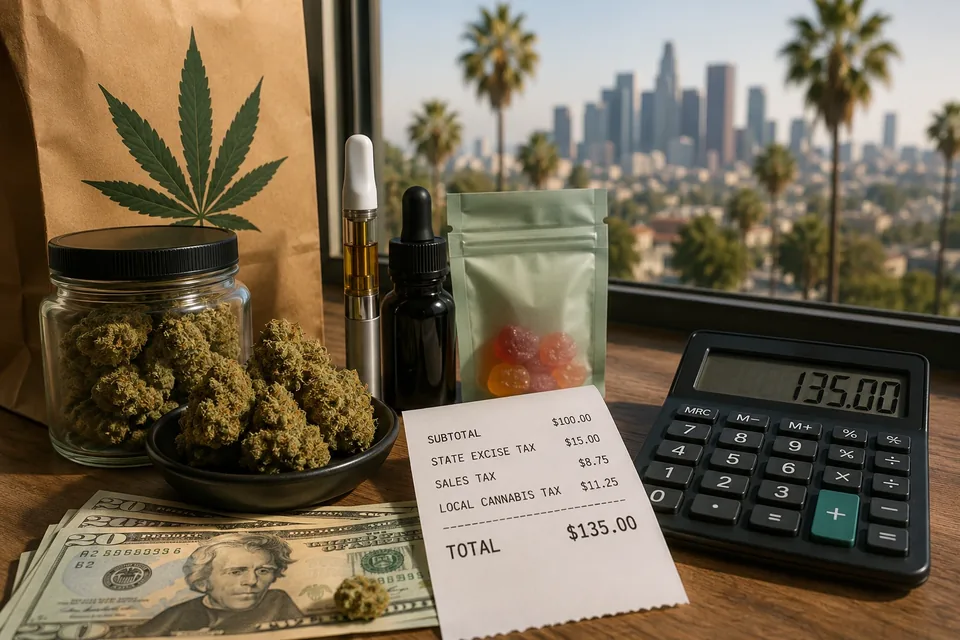
The Real Cost of Cannabis in Los Angeles: What You Pay and Where It Goes
A breakdown of the real cost of cannabis in Los Angeles, covering the layers of tax, where the money goes, and practical ways to
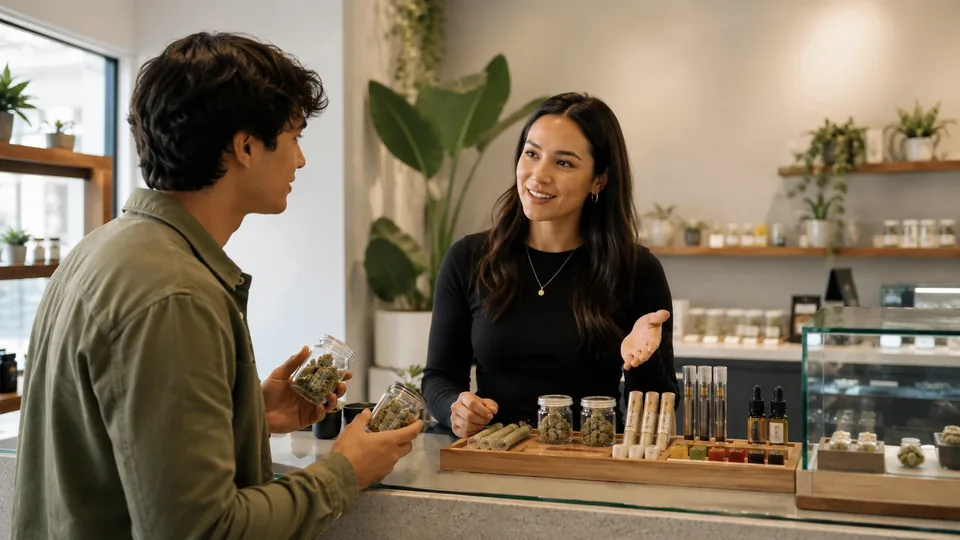
How to Talk to a Budtender: Questions Worth Asking Before You Buy
A guide to getting the most from a budtender, covering what to share, the best questions to ask about effects, products, and dosing, and
Four stores, open every day.
Beverly, Sylmar, Harbor City and Silver Lake. Bring a valid ID showing you are 21 or older.