
What Every Cannabis Consumer Should Know About California Prop 64
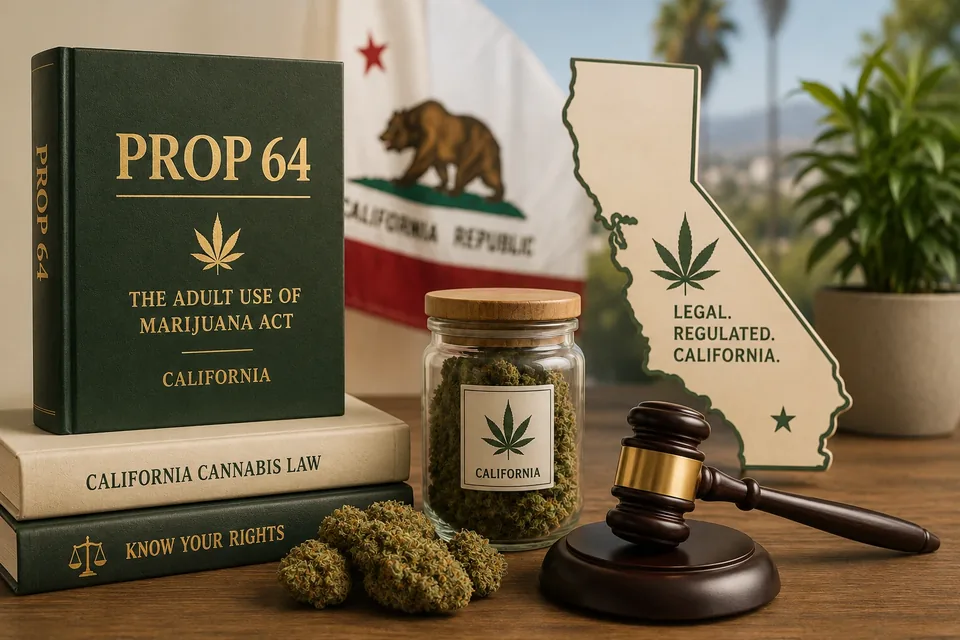
If you buy or use cannabis in California, Proposition 64 is the law that makes it possible. It legalized recreational cannabis for adults in 2016 and set the rules that govern everything from who can buy to where you can consume to how products are taxed.
Most consumers know the basics: you need to be 21, and you can buy from a licensed dispensary. But Prop 64 covers a lot more than that. Understanding the full picture helps you stay within the law, know your rights, and avoid common misconceptions.
Here is what the law actually says and what it means for you.
What Prop 64 Did
The Adult Use of Marijuana Act, commonly called Proposition 64, was approved by California voters in November 2016. It went into effect on January 1, 2018.
Before Prop 64, only patients with a valid medical cannabis recommendation could legally purchase cannabis in California. Prop 64 opened the market to all adults 21 and older, creating a regulated recreational cannabis system alongside the existing medical program.
The law established a licensing framework for cannabis businesses (cultivators, manufacturers, distributors, retailers, testing labs, and delivery services), set product safety requirements, created tax structures, and defined consumer rights and responsibilities.
Who Can Legally Buy and Possess Cannabis
Under Prop 64, any adult 21 or older can purchase and possess recreational cannabis in California. You do not need a medical card, a doctor’s recommendation, or a special permit. A valid government-issued ID proving your age is all you need.
Possession limits for recreational consumers:
- Up to 28.5 grams (1 ounce) of cannabis flower
- Up to 8 grams of concentrated cannabis (concentrates, oils, extracts)
These limits apply to what you can carry on your person at any time. They also reflect the maximum per-transaction limit at a dispensary.
Medical patients with a valid recommendation can possess larger amounts as specified by their physician, and local regulations may allow for additional personal cultivation.
Where You Can and Cannot Consume
This is the area where most consumers have gaps in their understanding.
You can consume cannabis:
- On private property (your own home, a friend’s home with their permission)
- In licensed cannabis consumption lounges, where they exist
You cannot consume cannabis:
- In any public place (sidewalks, parks, beaches, trails, plazas)
- Within 1,000 feet of a school, daycare, or youth center while children are present
- In a vehicle (whether you are driving or a passenger)
- On federal land (national parks, national forests, military bases)
- In rental properties or common areas of apartment buildings where the landlord or HOA prohibits it
- In any location where tobacco smoking is prohibited (in most cases)
The public consumption restriction is the one that catches people most often. Even though cannabis is legal, using it in public is a citable offense. This applies to smoking, vaping, and consuming edibles in any public space.
Some cities, like West Hollywood, have begun allowing cannabis consumption at licensed lounges and certain events. But these are specific, licensed venues, not a blanket allowance for public use.
Growing Cannabis at Home
Prop 64 allows adults 21 and older to grow up to 6 cannabis plants per household for personal use. Not per person, per household.
The plants must be grown in a locked, enclosed space that is not visible from a public area. This can be a locked room, a locked closet, or a secured grow tent. You cannot grow cannabis in your front yard or on an open balcony visible from the street.
Local regulations can add restrictions. Some cities and counties require permits for home cultivation or limit it further. Check your local rules before starting a grow.
Cannabis grown at home is for personal use only. You cannot sell homegrown cannabis without a commercial cultivation license.
Cannabis and Driving
Driving under the influence of cannabis is illegal in California, just like driving under the influence of alcohol. Prop 64 did not change existing DUI laws.
If a law enforcement officer suspects you are impaired while driving, they can conduct a field sobriety test. There is no universally accepted THC equivalent of a blood alcohol level threshold, which means impairment is assessed based on observed behavior and, in some cases, blood or urine testing.
The penalties for a cannabis DUI are comparable to an alcohol DUI: fines, license suspension, mandatory classes, and potential jail time depending on the circumstances and prior offenses.
The safest approach: do not drive after consuming cannabis. If you use cannabis delivery, the product comes to you, which removes any need to drive to or from a dispensary.
Taxes on Cannabis
Prop 64 established a tax framework for cannabis that includes multiple layers.
State excise tax is applied to all cannabis sales. As of the most recent rate, this is a percentage of the retail price.
State sales tax applies to recreational purchases. Medical patients with a valid Medical Marijuana Identification Card (MMIC) are exempt from state sales tax.
Local taxes vary by city and county. Many jurisdictions impose their own cannabis business tax or sales tax on top of state taxes. These local rates vary widely, which is one reason cannabis prices differ between dispensaries in different cities.
The combined tax rate on a recreational cannabis purchase in California typically ranges from roughly 25% to 40% depending on where you buy. This is significantly higher than taxes on most consumer goods and is a frequent topic of debate among consumers, industry advocates, and lawmakers.
The taxes fund several programs established by Prop 64, including youth education and substance abuse treatment, environmental restoration, and law enforcement training.
Employment Protections (and Their Limits)
California recently expanded employment protections for cannabis consumers. Assembly Bill 2188, which took effect in 2024, prohibits most employers from discriminating against employees or job applicants based on off-duty cannabis use.
The law applies to most employers but includes exceptions for the building and construction trades, positions requiring a federal background check, and any role where federal law or regulation requires drug testing.
Additionally, employers can still take action based on impairment at work. Using cannabis on the job, showing up to work impaired, or working in a safety-sensitive position under the influence are not protected activities.
This is still an evolving area of law. If you have specific concerns about cannabis and employment, consulting a legal professional is advisable.
Landlords and Rental Housing
Prop 64 gives property owners the right to prohibit cannabis use on their property. If your lease prohibits smoking or cannabis use, your landlord can enforce those terms.
Many apartment complexes and HOAs have policies against smoking of any kind, including cannabis. Even in states where cannabis is legal, landlords retain control over what happens on their property.
If you rent, review your lease for cannabis-related clauses. If smoking is prohibited, other consumption methods like edibles, tinctures, or vaping may or may not be acceptable depending on the specific terms.
Cannabis delivery is still fully legal to your rental address. The restriction applies to consumption, not possession or delivery.
Criminal Record Expungement
One of the less discussed provisions of Prop 64 is that it allows people with prior cannabis convictions to petition for reclassification or dismissal of their records. Offenses that are no longer crimes under Prop 64, or that would now be classified as lesser offenses, can be reduced or cleared.
This process is handled through the courts. California has also implemented automatic review of prior convictions through the Department of Justice, though the process has taken time to reach all eligible cases.
If you or someone you know has a prior cannabis conviction that might qualify for relief under Prop 64, contacting a legal aid organization or criminal defense attorney is the best first step.
Interstate Transport Is Still Illegal
California’s cannabis laws stop at the state border. Transporting cannabis across state lines is a federal offense, even if you are traveling between two states where cannabis is legal.
This applies to driving, flying, and mailing. TSA operates under federal jurisdiction, so cannabis discovered at an airport security checkpoint can result in federal charges regardless of state law.
Keep your cannabis within California. If you are traveling out of state, leave it at home.
Know the Law, Use It Responsibly
Prop 64 created a legal framework that gives California adults broad access to cannabis. But the law comes with rules about where you can use it, how much you can carry, and what you cannot do while under the influence.
Knowing these rules protects you. It also helps normalize responsible cannabis use and supports the continued development of a fair, functioning legal market.
Ready to order? Browse the Caña menu and order online for delivery across the San Fernando Valley, Silver Lake, Hollywood, West Hollywood, and surrounding areas. Questions about anything covered here? Reach out to the team anytime.
For adults 21 and over. Nothing in the Journal is medical advice. Keep cannabis out of reach of children and pets.
More from the Journal.

How to Tip Your Cannabis Delivery Driver (and Why You Should)
A practical guide to tipping your cannabis delivery driver, covering how much to give, how to tip, and why tipping matters for drivers and
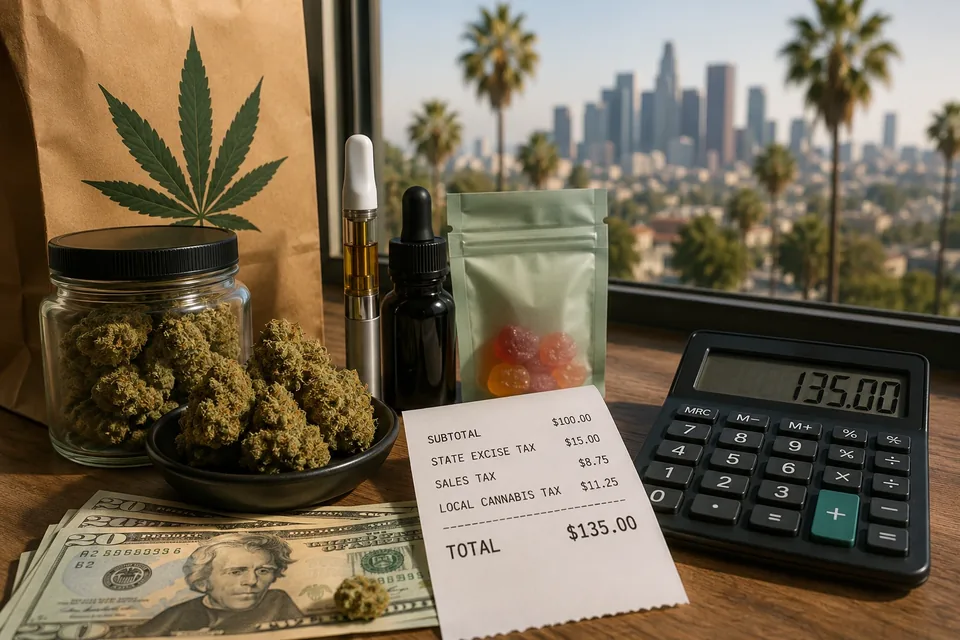
The Real Cost of Cannabis in Los Angeles: What You Pay and Where It Goes
A breakdown of the real cost of cannabis in Los Angeles, covering the layers of tax, where the money goes, and practical ways to

How to Talk to a Budtender: Questions Worth Asking Before You Buy
A guide to getting the most from a budtender, covering what to share, the best questions to ask about effects, products, and dosing, and
Four stores, open every day.
Beverly, Sylmar, Harbor City and Silver Lake. Bring a valid ID showing you are 21 or older.