
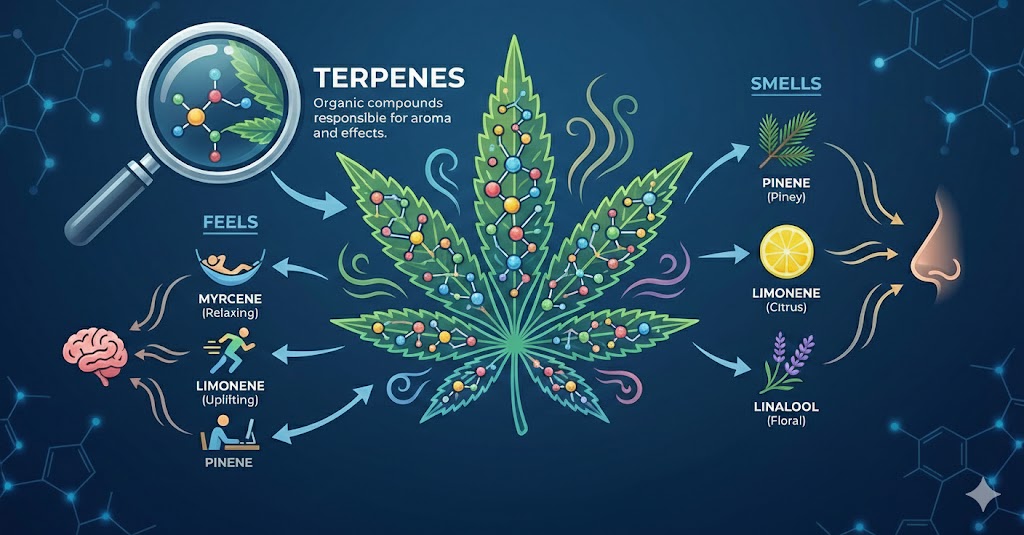
You open a jar of cannabis and take a sniff. Maybe it smells like lemons. Maybe it smells like pine trees, or diesel fuel, or fresh berries. That smell isn’t random. It comes from compounds called terpenes.
Terpenes do more than create aroma. They also shape how cannabis makes you feel. Two strains with the same THC percentage can produce very different effects based on their terpene profiles.
Once you understand how terpenes work, you can shop smarter. Instead of guessing which strain might help you relax or stay focused, you can look at the terpene profile and make a more informed choice.
What Are Terpenes?
Terpenes are natural compounds found in many plants, not just cannabis. They’re responsible for the smell of lavender, the taste of oranges, and the scent of pine forests. Plants produce terpenes to attract pollinators and protect against pests.
Cannabis plants are especially rich in terpenes. Scientists have identified over 200 different terpenes in cannabis, though most strains contain only a handful in significant amounts.
When you smell cannabis, you’re smelling its terpene profile. Each strain has a unique combination of these compounds, which is why Purple Punch smells nothing like Sour Diesel.
Terpenes Do More Than Smell Good
Here’s the interesting part. Research suggests that terpenes don’t just affect aroma. They may also influence how cannabis affects your mind and body.
This idea is called the “entourage effect.” The theory says that cannabinoids like THC and CBD work together with terpenes to create the overall experience. A strain’s effects aren’t just about how much THC it has. They’re about how all the compounds interact.
This is why two strains with 25 percent THC can feel completely different. One might make you sleepy. The other might make you giggly and social. The terpene profile plays a big role in that difference.
The Most Common Cannabis Terpenes
Let’s look at the terpenes you’ll encounter most often. Learning these will help you predict how a strain might affect you.
Myrcene
Smell: Earthy, musky, herbal, slightly fruity like mangoes
Also found in: Mangoes, hops, lemongrass, thyme
Potential effects: Myrcene is the most common terpene in cannabis. It’s associated with relaxation and sedation. Strains high in myrcene often produce that classic “couch-lock” feeling. If you want to wind down and sleep, look for myrcene-dominant strains.
Common in: Granddaddy Purple, OG Kush, Blue Dream
Limonene
Smell: Citrus, lemon, orange
Also found in: Lemon rinds, orange peels, juniper
Potential effects: Limonene is linked to elevated mood and stress relief. Strains high in limonene often feel uplifting and energizing. Some users find it helps with anxiety, though effects vary from person to person.
Common in: Super Lemon Haze, Durban Poison, Wedding Cake
Caryophyllene
Smell: Spicy, peppery, woody
Also found in: Black pepper, cloves, cinnamon
Potential effects: Caryophyllene is unique because it can bind to cannabinoid receptors in your body. Some research suggests it may have anti-inflammatory properties. Users often describe strains high in caryophyllene as physically soothing without heavy sedation.
Common in: GSC (Girl Scout Cookies), Bubba Kush, Chemdawg
Pinene
Smell: Pine, fresh forest air
Also found in: Pine needles, rosemary, basil
Potential effects: Pinene is associated with alertness and mental clarity. Some users find it counteracts the short-term memory issues that THC can cause. Strains high in pinene often feel clear-headed rather than foggy.
Common in: Jack Herer, Blue Dream, Snoop’s Dream
Linalool
Smell: Floral, lavender, slightly spicy
Also found in: Lavender, mint, coriander
Potential effects: Linalool is known for calming properties. It’s the same terpene that makes lavender popular for relaxation. Strains high in linalool may help with stress and promote restful sleep.
Common in: Amnesia Haze, Lavender, LA Confidential
Humulene
Smell: Earthy, woody, hoppy
Also found in: Hops, coriander, basil
Potential effects: Humulene is found in hops, which is why some cannabis strains smell like beer. It’s associated with appetite suppression, which is unusual since most people expect cannabis to increase hunger.
Common in: White Widow, Headband, Pink Kush
Terpinolene
Smell: Floral, herbal, slightly piney with citrus notes
Also found in: Nutmeg, tea tree, apples
Potential effects: Terpinolene is less common but shows up in certain uplifting strains. Users often describe it as producing cerebral, creative effects. It’s found in many sativa-leaning varieties.
Common in: Jack Herer, Dutch Treat, Ghost Train Haze
How to Use Terpenes When Shopping
Now that you know the major terpenes, here’s how to put that knowledge to use.
Check the lab results
Many dispensaries display terpene profiles on their menus or product labels. Look for the top two or three terpenes listed. This gives you a preview of how the strain might smell and feel.
If a strain shows high myrcene, expect relaxation. If it shows high limonene and pinene, expect something more energizing.
Match terpenes to your goals
Think about what you want from your cannabis session. Then look for terpenes that align with that goal.
Want to relax and sleep? Look for myrcene and linalool.
Want to feel uplifted and social? Look for limonene and terpinolene.
Want to stay clear-headed? Look for pinene.
Want physical relief without heavy sedation? Look for caryophyllene.
Use your nose
This might sound simple, but it works. When you’re at a dispensary, ask to smell the flower before you buy. Your nose often knows what your body wants.
If a strain smells amazing to you, there’s a good chance you’ll enjoy its effects. If it smells harsh or unpleasant, you might want to try something else.
Keep notes
Terpenes affect everyone a little differently. What relaxes one person might energize another. The best way to learn what works for you is to pay attention.
When you try a new strain, write down the name and its dominant terpenes. Then note how it made you feel. Over time, you’ll start to see patterns. Maybe you always enjoy strains high in caryophyllene. Maybe limonene makes you anxious. This personal data is more valuable than any general guide.
Terpenes in Different Products
Terpenes aren’t just in flower. You’ll find them in other cannabis products too.
Vape cartridges: Live resin carts preserve the original terpene profile. Distillate carts have terpenes added back in, which may or may not match the original strain.
Concentrates: Products like live resin, rosin, and sauce tend to have rich terpene content. Distillate and isolate have less.
Edibles: Most edibles don’t contain significant terpenes because they get lost during the cooking process. Some brands add terpenes to create strain-specific edibles, but this is less common.
If terpenes matter to you, flower and live resin products will give you the fullest experience.
Why Terpenes Matter More Than You Think
The cannabis market has focused heavily on THC percentages for years. Many shoppers just grab the strain with the highest number. But this approach misses a big part of the picture.
A strain with 18 percent THC and a perfect terpene profile for your needs might serve you better than a strain with 30 percent THC and terpenes that don’t match what you’re looking for.
As you learn more about terpenes, you’ll make better choices. You’ll find strains that actually deliver the experience you want instead of just chasing numbers.
Finding Your Terpene Favorites
The best way to explore terpenes is to try different strains and pay attention. Browse the [flower selection <order-online flower filter>] at your local dispensary and ask the budtender about terpene profiles. Many are happy to guide you toward strains that match your preferences.
Start by identifying one or two terpenes you enjoy. Then look for other strains that feature those same terpenes. This approach helps you expand your options while staying in territory you know you like.
The Bottom Line
Terpenes are the hidden key to understanding cannabis. They create the smells you love, and they shape the effects you feel. Learning a few major terpenes gives you a new way to navigate the menu.
Next time you shop, look beyond the THC number. Check the terpene profile. Smell the flower. And start building your personal map of what works best for you.