
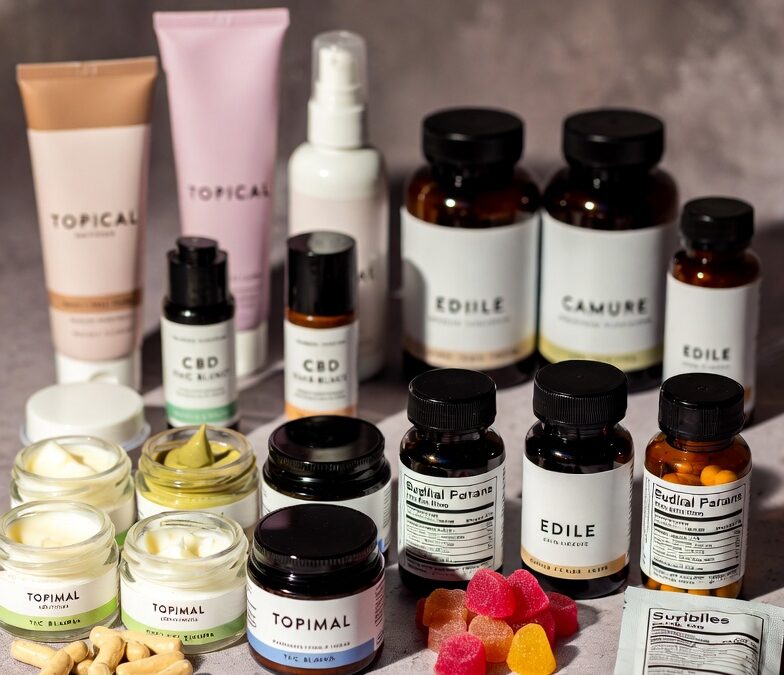
The Answer Depends on Where Your Pain Lives
Your knee has been aching for weeks. Maybe your lower back seized up again. Or those headaches keep creeping in every afternoon. You’ve heard cannabis can help with pain, but now you’re staring at a menu full of lotions, balms, gummies, and chocolates wondering which one actually works.
Here’s the shortcut: topicals work best for pain you can point to with one finger. Edibles work best for pain that’s everywhere or pain that keeps you up at night. Pick the wrong one and you’ll waste money on a product that never had a chance of helping your specific problem.
Topicals Stay Local While Edibles Go Systemic
Understanding one basic difference saves you from expensive mistakes.
Topicals absorb through your skin and affect the immediate area. Rub a balm on your sore shoulder, and cannabinoids interact with receptors right there in that tissue. Nothing enters your bloodstream in significant amounts. You won’t feel high. The relief stays localized.
Edibles enter your digestive system, get processed by your liver, and send cannabinoids throughout your entire body via your bloodstream. You’ll likely feel psychoactive effects. The relief spreads everywhere.
A topical can’t help a migraine. An edible is overkill for a sore elbow. Match the delivery method to the pain type.
When Topicals Are the Right Call
Topicals excel at surface level, localized pain. Think joints, muscles, and skin conditions.
Arthritis in hands or knees: Rub a balm directly on the affected joint. Cannabinoids interact with local CB2 receptors in the tissue. Many people feel relief within 15 to 30 minutes.
Muscle soreness after workouts: A cooling CBD gel on tight quads or a sore back targets exactly where you need it. No drowsiness, no impairment, no waiting hours for effects.
Tendonitis or repetitive strain: Tennis elbow, carpal tunnel discomfort, plantar fasciitis all respond well to direct topical application.
Skin conditions: Psoriasis, eczema, and localized inflammation often improve with cannabinoid infused topicals. The anti inflammatory properties work right at the surface.
Walk into Cana and ask specifically about high CBD topicals for daytime use. THC topicals exist too, but CBD dominates the topical market because psychoactive effects aren’t the goal here.
When Edibles Make More Sense
Edibles tackle pain that’s widespread, deep, or chronic. The systemic approach works when localized treatment can’t reach the problem.
Fibromyalgia or widespread chronic pain: Pain that moves around or affects multiple areas needs whole body relief. Rubbing balm on seventeen different spots isn’t practical.
Nerve pain: Neuropathy, sciatica, and other nerve related pain often responds better to internal cannabinoids than topical application. The pain signals originate deep in the nervous system.
Pain that disrupts sleep: Edibles last 4 to 8 hours. Taking one before bed can provide overnight relief that a topical simply can’t maintain. Sleep quality improves when pain isn’t waking you up constantly.
Inflammatory conditions affecting the whole body: Autoimmune conditions, severe arthritis affecting multiple joints, and systemic inflammation benefit from cannabinoids circulating through the bloodstream.
Menstrual cramps: Internal pain responds to internal treatment. Edibles work better here than rubbing something on your abdomen.
Browse the edibles selection for options ranging from low dose gummies perfect for beginners to higher potency options for experienced users.
The Onset Time Difference Changes Everything
Topicals start working in 15 to 30 minutes. Apply, wait a bit, feel relief. Simple.
Edibles take 45 minutes to 2 hours to kick in. Sometimes longer. Your metabolism, what you’ve eaten, your individual body chemistry all affect timing. First timers often make the mistake of taking more because they don’t feel anything yet. An hour later, they feel way too much.
For immediate pain relief: Topicals win. No contest.
For extended pain management: Edibles win. One dose can last most of your waking hours.
Planning matters with edibles. Taking a gummy when your back already hurts means waiting over an hour for relief. Taking one before your pain typically flares up, like before bed if mornings are worst, makes more sense.
Why Topicals Won’t Get You High and Why That Matters
Most topicals don’t penetrate deep enough to reach your bloodstream in meaningful amounts. Cannabinoids stay in the local tissue. Your brain never gets the memo.
Why this matters for daytime use: You can apply topicals at work, before driving, during family events, anytime. No impairment, no red eyes, no altered state. Pain relief without any of the baggage.
Why this matters for drug tests: Topicals generally don’t trigger positive results on standard drug tests. Generally. Some transdermal patches are designed to enter the bloodstream, so those could theoretically show up. Standard lotions and balms? You’re almost certainly fine.
Edibles will absolutely get you high if they contain THC. Even balanced products with CBD included still produce psychoactive effects. Plan accordingly. Don’t take an edible and drive. Don’t take one before work unless you know exactly how it affects you.
Transdermal Patches: The Hybrid Option
Transdermal patches bridge the gap between topicals and edibles. Stick one on your skin, and cannabinoids slowly release into your bloodstream over 8 to 12 hours.
Unlike regular topicals, patches do produce systemic effects. Unlike edibles, the release is gradual and steady with no peak, no crash, and no waiting for onset.
Best for: All day chronic pain management, consistent overnight relief, people who want systemic effects without eating anything.
Downsides: Less control over dosing once applied. Can’t easily adjust if effects are too strong. More expensive per dose than most edibles.
Patches work well for people who know their tolerance and want set it and forget it pain management. Not ideal for beginners still figuring out their optimal dose.
CBD Only vs THC vs Balanced: What Actually Helps Pain?
The cannabinoid ratio matters as much as the delivery method.
CBD only topicals and edibles: Anti inflammatory, non psychoactive. Good for mild to moderate pain, especially inflammatory conditions. Won’t get you high. Available in higher doses since impairment isn’t a concern.
THC dominant products: Stronger pain relief for many people, but comes with psychoactive effects. The high can distract from pain too, not just masking symptoms, but genuinely shifting your relationship with discomfort.
Balanced CBD to THC ratios (1:1, 2:1, etc.): Often the sweet spot for pain. CBD moderates THC’s intensity while both contribute to pain relief. Many dispensary regulars dealing with chronic pain prefer balanced formulas.
Ask budtenders at Cana’s Sylmar location about balanced ratio products. Explaining your pain type and tolerance level helps them point you toward the right ratio.
Dosing Edibles for Pain: Start Lower Than You Think
First time edible dose for pain: 2.5 to 5mg THC. Seriously. Even if that sounds tiny.
Wait time before taking more: At least 2 hours. Preferably 3.
Building up: Increase by 2.5 to 5mg increments on subsequent days until you find relief without unwanted intensity.
Many chronic pain patients eventually land somewhere between 10 to 30mg per dose. Some need more, some need less. The only way to find your number is starting low and working up gradually.
Going too high too fast doesn’t just feel unpleasant. It makes future dosing harder because you’ll associate edibles with negative experiences. Patience during the first week pays off.
Dosing Topicals: Be Generous
Unlike edibles, you can’t really overdose on topicals. More product means more cannabinoids available for absorption.
Starting out: Apply a quarter sized amount to the affected area. Massage it in thoroughly.
Not feeling enough relief: Apply more. Reapply every few hours as needed.
Frequency: Most topicals work best with consistent, repeated application. Three to four times daily often beats one heavy application.
Topicals are forgiving. Experiment freely without worrying about taking too much.
The Cost Breakdown Might Surprise You
Topicals typically cost $30 to $60 for a jar or tube lasting 2 to 4 weeks with regular use. Per dose cost is low, but you go through product quickly if applying multiple times daily.
Edibles range from $15 to $40 for a package, but one package might last days or weeks depending on your dose. Per dose cost can be lower than topicals for ongoing chronic pain management.
Patches cost $15 to $25 each and last one day. Most expensive option for daily use, but the convenience factor matters for some people.
For occasional pain like workout soreness, flare ups, and minor injuries, topicals usually make more financial sense. For daily chronic pain, edibles often provide better value despite higher upfront cost per purchase.
Combining Both Approaches Works for Many People
Nobody says you have to choose just one. Layering topicals and edibles can address pain from multiple angles.
Morning routine: Apply topical to problem areas. Addresses immediate localized discomfort.
Afternoon or evening: Low dose edible for systemic relief that carries you through the rest of the day.
Before bed: Slightly higher edible dose for overnight pain management and better sleep.
Flare ups: Extra topical application whenever needed. Won’t interfere with edibles already in your system.
Talk to a budtender about building a multi product pain management approach. Everyone’s situation differs, but layering methods works well for many chronic pain patients.
What Questions to Ask Before Buying
Walk into Cana ready with these questions:
“What’s the most popular topical for joint pain specifically?”
“Do you have low dose edibles for someone who’s never tried them?”
“What ratio of CBD to THC works best for my specific type of pain?”
“How long does this topical typically last after application?”
“Are there any edibles that work faster than standard gummies?”
Good budtenders at dispensaries serving Sylmar, Pacoima, and Santa Clarita answer these questions daily. Bring your specific pain situation. The more detail you share, the better their recommendation.
Make the Call Based on Your Pain Type
Localized joint or muscle pain you can point to? Start with topicals. Grab a balm or gel, apply directly, see how it works before exploring anything more complex.
Widespread, deep, or chronic pain affecting your whole body or sleep? Edibles make more sense. Start with a low dose, be patient with onset time, and work up gradually.
Not sure which category your pain falls into? Start with topicals anyway. Lower risk, faster feedback, no psychoactive commitment. You’ll know pretty quickly whether localized treatment is enough.
Check out Cana’s full menu for both options, or stop by the Sylmar shop for personalized recommendations. Delivery reaches everywhere in the LA area if you’d rather not make the trip.
Pain management isn’t one size fits all. Neither is cannabis. Find what works for your specific situation.